Generative Creativity: Creating From Nothing
Devin
2/19/202610 min read
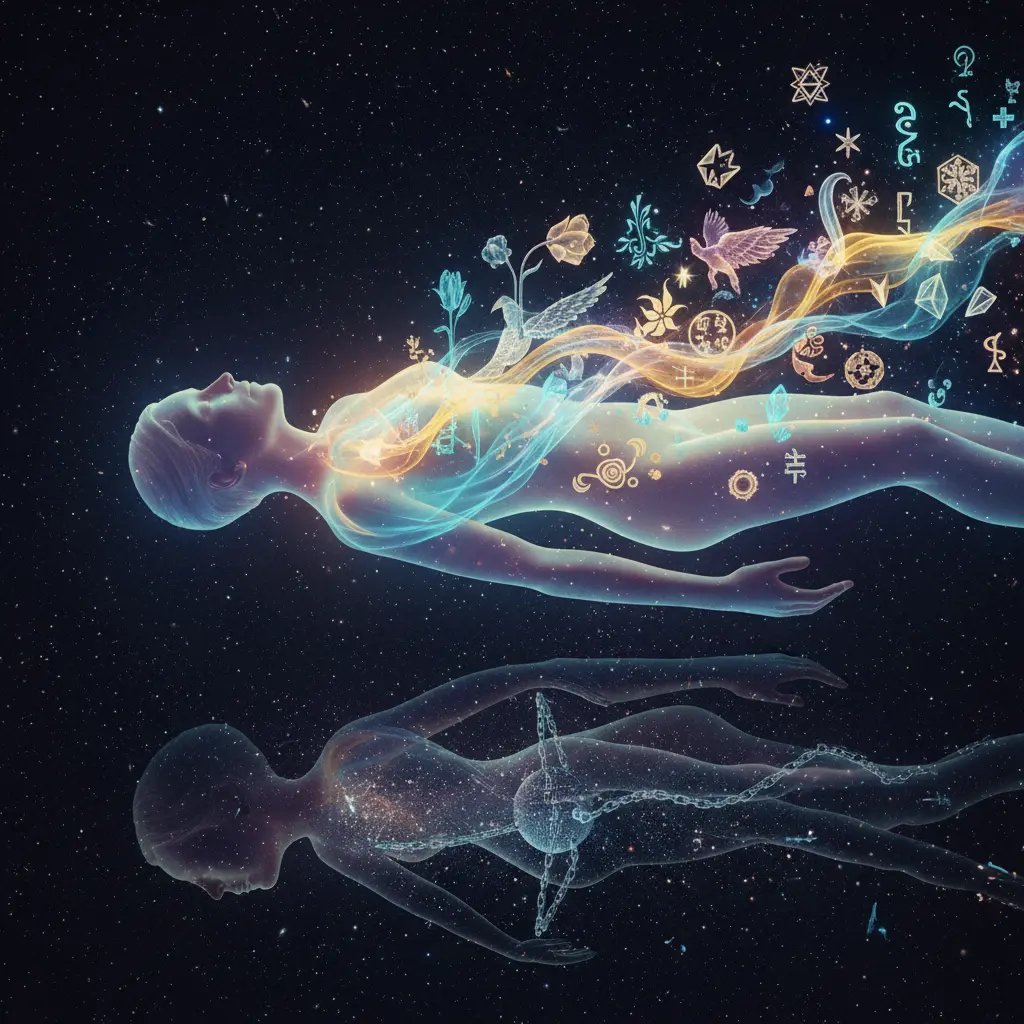
Creating From Nothing
You face a blank canvas. A blank page. An empty room waiting to be designed. The pressure to create something original, something meaningful, something that matters builds inside you. You try to think your way to an idea. You brainstorm. You research what others have done. You analyze techniques. Nothing flows. The harder you push, the more blocked you feel.
Then you stop trying. You sit with the emptiness. You let your mind wander. And suddenly, something emerges. From a deeper place. A solution appears that's genuinely novel. It feels right in a way that forced ideas never do. You didn't think your way to it. It came through you.
This is generative creativity. The capacity to create from a place of flow rather than from force. To allow original expression to emerge without filtering it through judgment or technique.
What is Generative Creativity?
Generative creativity is not the creativity of copying, recombining, or iterating on existing forms. It's the capacity to generate genuinely novel expressions that didn't exist before. Work that comes through you rather than from you. Work that feels alive because it emerged from a deeper source.
In Homo sapiens consciousness, creativity is largely derivative. You learn techniques. You study what others have created. You practice combinations and variations. You refine existing approaches. This has value. But it's not generative creativity.
Generative creativity operates differently. It works with the creative impulse at its source. Before technique. Before judgment. Before the mind decides what's acceptable or marketable or safe. At that point, anything is possible. Forms emerge that couldn't have been predicted. Solutions appear that violate conventional rules but work brilliantly.
The distinction matters. Derivative creativity produces good work. But generative creativity produces work that shifts what's possible. Work that opens doors. Work that makes people say "I didn't know that was possible."
Generative creativity is also not inspiration in the romantic sense. You don't sit around waiting for the muse to strike. Generative creativity requires engagement and structure. You do the groundwork. You gather information. You work with the material consciously. Then you create conditions where the deeper creative work can happen.
How Generative Creativity Manifests
The manifestations of generative creativity are visible and energizing.
You're designing a product and you've hit the conventional boundaries. The standard approaches are all being used by competitors. Then something emerges. A completely different way of thinking about the problem. One that makes the competitors' approaches seem obvious in retrospect. One that opens an entirely new category. This is generative creativity.
You're writing and you're stuck on a particular section. The logical structure isn't working. You step away. You sleep on it. When you return, you see the section differently. A structural element you hadn't considered becomes obvious. The piece suddenly has a coherence it was missing. This is generative creativity applied to language and form.
You're in a meeting trying to solve a complex organizational challenge. The standard solutions are being proposed. They're logical. They follow precedent. But something in you knows they won't work. Then someone speaks something that's never been said before. A completely different way of understanding the challenge. And suddenly everyone sees the problem differently. The solution becomes obvious. This is generative creativity applied to systems and organizations.
You're creating art or music and something emerges through your hands or voice that surprises you. It's more elegant than what you were trying to make. It's more true. It has a rightness about it that forced creation never has. This is generative creativity at its purest.
You're in a conversation and instead of repeating platitudes or conventional wisdom, something fresh emerges. An insight no one has articulated before. A way of understanding that reframes everything. The other person feels it. Their consciousness shifts. This is generative creativity applied to communication.
Over time, as generative creativity develops, your creative output transforms. You're generating novel forms regularly. You're not blocked by convention. You're not limited by what's been done before. You're accessing something that's genuinely creative.
The Neuroscience of Generative Creativity
Generative creativity produces specific and measurable changes in brain organization and function.
In conventional problem-solving and creative work, your brain relies heavily on the prefrontal cortex (the region responsible for planning, analysis, and decision-making). The executive function is in charge. You're thinking through solutions. You're evaluating options. This is useful work. But it blocks generative creativity because the executive function operates through known patterns and precedent.
When generative creativity activates, something shifts. The prefrontal cortex quiets slightly. The default mode network (the system involved in mind-wandering, imagination, and non-linear thought) becomes more active. Your brain is making novel associations. It's connecting information in unexpected ways. Patterns that would be invisible to the executive function become visible.
Simultaneously, the anterior cingulate cortex activates. This region is involved in detecting conflicts and novelty. It's signaling that something new is emerging. When this region is active during creative work, the resulting creations are more original and more impactful.
The remarkable finding is that generative creativity correlates with increased communication between typically separate brain networks. Your default mode network is talking to your task-positive network. Your emotional centers are communicating with your analytical centers. Instead of different brain systems competing for dominance, they're collaborating.
This neural integration doesn't happen through trying harder or thinking more intensely. It happens when you:
- Engage consciously with the material or problem (task-positive network activation)
- Then deliberately relax and allow mind-wandering (default mode network activation)
- Create psychological safety so your brain isn't in threat mode (reduced amygdala activity)
- Remove judgment temporarily so novel ideas aren't immediately suppressed (reduced prefrontal filtering)
This is why many people report that their best ideas come in the shower, on a walk, or just before sleep. These are the exact conditions where the brain reorganizes into the neural configuration for generative creativity. The shower is engaging but doesn't require focused thinking. The walk is rhythmic and allows mind-wandering. The pre-sleep state is when the default mode network is most active. When your brainwaves are in Theta mode.
Brain imaging of highly creative individuals shows that their baseline neural organization supports generative creativity. The connectivity between networks is stronger. The prefrontal cortex is less reactive. There's more neural integration overall. Importantly, this baseline organization can be trained. As you practice generative creativity consistently, your brain reorganizes toward this integrated state.
Why Generative Creativity Matters
The development of generative creativity capacity is revolutionary for innovation, contribution, and meaning-making.
First, it's revolutionary for competitive advantage. In a world where derivative work is increasingly common and increasingly easy to produce, genuinely creative work becomes more valuable. When you can generate novel solutions to problems, you become invaluable. Organizations thrive because they're solving problems in ways competitors haven't imagined.
Second, it's revolutionary for personal satisfaction. Derivative work is often experienced as obligatory. You're following instructions or formulas. Generative creativity is experienced as flow. You're in the zone. Time disappears. The work is intrinsically rewarding. This is the difference between work that drains you and work that energizes you.
Third, it's revolutionary for impact. Work that emerges from generative creativity shifts what's possible for others. It opens doors. It creates new categories. It makes people think differently. This is how culture evolves. This is how human consciousness advances.
Fourth, it's revolutionary for collaboration. When people are working from generative creativity rather than from conventional wisdom or fear, collaboration becomes highly effective. The creative energy is contagious. Novel ideas bounce between people and generate even more novelty. The whole becomes greater than the sum of parts.
Fifth, it's revolutionary for problem-solving in complexity. The problems facing organizations and society now are genuinely complex. They don't have predetermined solutions. They require generative thinking. Standard approaches won't work. When you develop generative creativity, you become capable of working with real complexity.
Most fundamentally, generative creativity is the expression of your aliveness. You have creative capacity. When you access it, you feel alive. You feel like yourself. The alternative (living in derivative patterns, repeating what's been done) is a kind of slow death. Generative creativity is the expression of your vitality.
Signs You're Developing Generative Creativity
Several signs indicate you're developing this capacity.
You experience flow more frequently. You lose track of time in your creative work. The work is absorbing. Ideas come easily. This state is increasingly available to you.
Your ideas are increasingly novel. They don't fit conventional categories. People say, "I've never thought of it that way." Your work opens conversations rather than closing them.
You're less blocked by rules and convention. You understand technique and structure, but you're not imprisoned by them. You can break the rules intelligently because you understand them so well.
You move between focused work and unfocused wandering with ease. You know when to push and when to relax. You trust that the incubation period (the time when you're not consciously working) is when the real creative work happens.
You attract collaborators and clients who value originality. These are the people who seek out your work because it's genuinely creative. Your work generates opportunity naturally.
You notice that solutions and creative ideas come to you regularly. Not just when you're trying. In the shower. In conversations. Just waking up. The creative channel is increasingly open.
You feel less afraid of blank pages or empty canvases. You trust your creative capacity. You know that something will emerge if you engage with the process.
Developing Generative Creativity
The development of generative creativity requires both structure and non-structure
First, engage deeply with your medium or domain. Master technique. Understand the rules thoroughly. Study what others have created. This groundwork is essential. You can't generate truly novel work without understanding the conventions you're working with or against. The old saying is true: you have to know the rules before you can break them intelligently.
Then, deliberately create space for the creative work to happen. This space is not passive. You're engaged. But you're not forcing. You're setting a question or a challenge and then allowing your deeper mind to work on it.
This might look like:
- Working consciously on a problem for a defined period, then stepping away for several hours or overnight
- Moving your body while your mind works on the creative challenge (walking, swimming, dancing)
- Meditation or contemplative practice that trains your brain to work in the generative mode
- Spending time in natural environments where your thinking mind naturally quiets
- Creating with minimal judgment (putting ideas down without evaluating them)
- Collaborating with people who stimulate your creative thinking
The practice of creating without judgment is particularly powerful. Most people suppress creative ideas before they even become conscious because the ideas don't fit conventional categories. When you practice creating without evaluating (letting ideas flow without judging whether they're good or practical), you access a much richer stream of creativity.
Journaling with creative intent develops generative creativity. You're not journaling to solve a problem or process emotions. You're journaling to discover what wants to emerge. You write not knowing what will appear on the page. This trains your brain to trust the creative process.
Exposure to diverse domains accelerates generative creativity development. When your brain has access to a diverse range of information and experience, it can make more novel connections. Specialists can become limited by their specialization. Renaissance thinking (understanding multiple domains) creates the cognitive flexibility for generative creativity.
Common Blocks to Generative Creativity
Several blocks commonly prevent generative creativity development.
The first block is the belief that you have to know what you're creating before you create it. You want certainty before you begin. This prevents generative work because the whole point is discovering what wants to emerge.
Testing this block means practicing creating without a predetermined outcome. You create and discover what emerges rather than forcing what you already decided.
The second block is judgment. You have an idea and immediately evaluate whether it's good, practical, marketable. The idea is suppressed before it can develop. Generative creativity requires you to let ideas emerge and develop before evaluating them.
Separating the creative process from the editing process dissolves this block. First, generate. Then evaluate. Not simultaneously.
The third block is the belief that real creativity is mystical or only available to certain people. You don't think you're creative. You don't expect ideas to come. This self-concept prevents generative work.
Recognizing that generative creativity is a trainable capacity (not a mystical gift but a neural mode your brain can learn to access) dissolves this block. Anyone can develop it.
The fourth block is too much structure. You've learned technique so thoroughly that you're imprisoned by it. You can't access genuine novelty because the rules have become rigid.
Deliberately breaking your own rules helps. Practice creating outside your normal boundaries. This reminds your brain that it's capable of more than the patterns it's learned.
The fifth block is not allowing adequate incubation time. You're so busy that you don't have space for your deeper mind to work. You're always forcing. You're never allowing.
Creating adequate white space in your schedule is essential. Your brain needs time to work on creative challenges beyond your conscious awareness.
The sixth block is creating in isolation. You're trying to generate creativity alone without external input or collaboration. This limits the raw material your brain has to work with.
Collaboration and exposure to others' ideas provide the cognitive diversity that generative creativity needs.
Generative Creativity and the Homo Luminous Path
Generative creativity is not the endpoint of Homo Luminous development. It's a natural expression of it.
When you're operating from direct knowing, you perceive solutions directly rather than constructing them through analysis. When you're not defended against your own intuition, creative flow is accessible. When you're present and not obsessing about what others will think, genuine expression emerges.
Generative creativity is also the practical application of Homo Luminous consciousness to creation. The problems facing humanity require genuinely creative solutions. Solutions that violate conventional thinking. Solutions that couldn't have been predicted from existing approaches. These emerge from generative creativity.
People developing Homo Luminous consciousness naturally develop generative creativity because the gap between what wants to be created and what's conventionally acceptable becomes too large to ignore. They can't force themselves back into derivative work. The creative authenticity emerges.
Generative creativity at the collective level is how culture evolves. When enough individuals are accessing generative creativity, the collective consciousness shifts. New possibilities become visible. What was impossible becomes obvious. This is how human evolution happens.
The Creative Life Available
What becomes possible as you develop generative creativity is a life that flows from your authentic creative expression.
You're not doing work you tolerate for a paycheck. You're creating work that energizes you. Work that feels alive. Work that contributes something genuinely new to the world.
You're not blocked by self-doubt or convention. You move with creative fluidity. Ideas come. You engage with them. They develop. You refine and release them. The creative process is increasingly natural.
You're attracting people and opportunities that value your creative work. Your creativity is generating the life you want to live because you're expressing your actual creative capacity rather than suppressing it.
Most fundamentally, generative creativity is how Homo Luminous consciousness creates in the world. It's not forced. It's not derivative. It's genuinely generative. And it's available to you.
Next Steps
Think of something you want to create. Something you've been putting off because you didn't know where to start or how to do it.
The next time you have an hour, engage consciously with the challenge. Research. Brainstorm. Sketch. Think about it. Use your analytical mind fully.
Then stop. Set it aside deliberately. Go do something completely different for at least a few hours. Better yet, sleep on it.
When you return, notice what's different. Has new insight emerged? Is the path forward clearer? Have you had ideas you didn't have before?