Systemic Perception: How Systems Really Work
Devin
2/22/20265 min read
Seeing How Things Really Work
You walk into an organization and everyone is trying to fix a problem.
A department isn’t performing. A process keeps breaking down. Conflict is escalating. People suggest the usual fixes: more training, a reorg, new tools, stricter rules.
But something feels off.
You can tell the visible problem isn’t the real problem. It’s just the symptom. The real issue runs deeper. It’s built into the way the system itself is set up.
You notice that the incentive structure rewards the very behavior people say they want to eliminate. You see how power dynamics quietly push people into patterns that look like personal choices but really aren’t. You recognize that information isn’t flowing where it needs to go. You sense the unspoken assumptions everyone is operating from.
And once you see that, the solution changes.
It’s no longer about fixing a symptom. It’s about changing the structure that keeps producing it.
That’s systemic perception.
It’s the ability to see how a system actually works beneath the surface.
What Systemic Perception Really Is
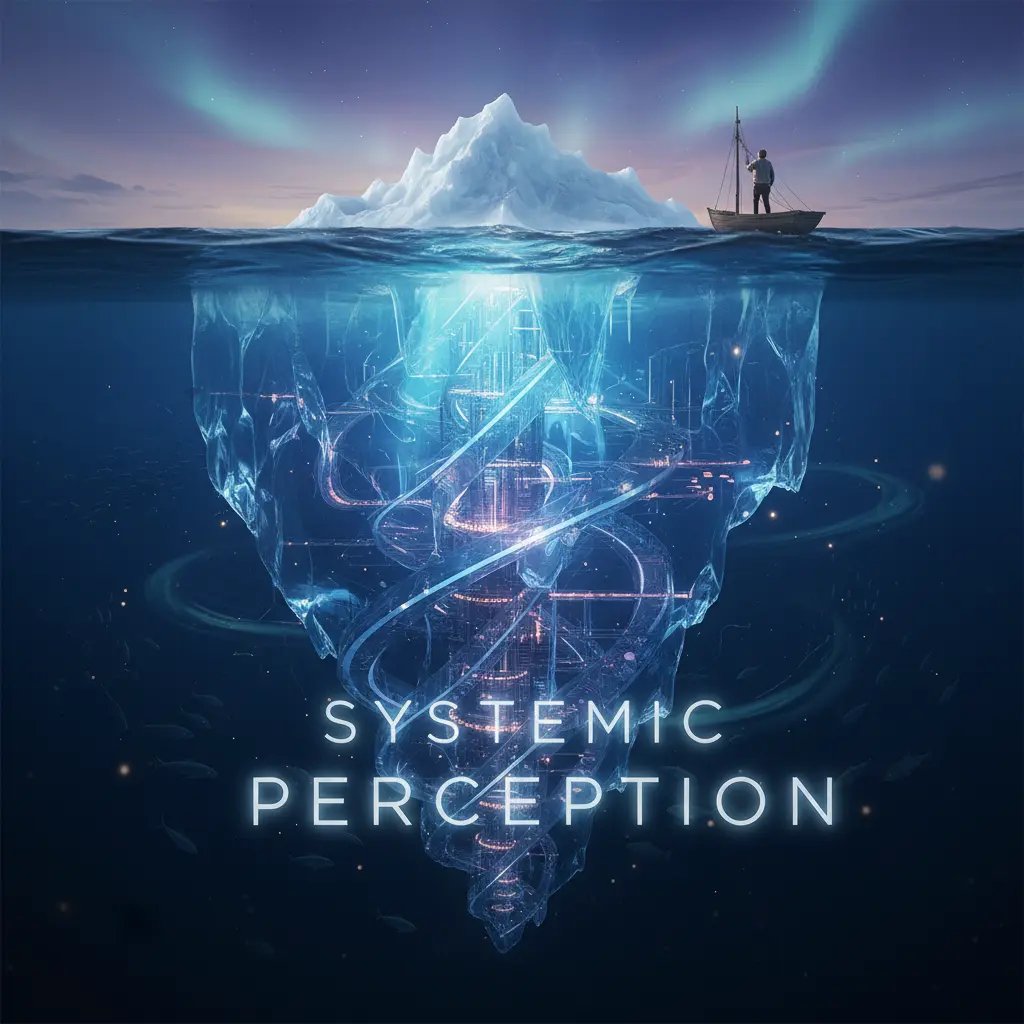
Systemic perception is the ability to see the invisible architecture behind visible outcomes.
Most people see problems at the surface level. Something’s broken. Someone isn’t performing. A process is inefficient. So they try to fix what they can see.
But the visible issue is usually just what the system is producing.
Systemic perception looks deeper. It asks:
What incentives are shaping behavior?
What power structures are in play?
How does information move?
What assumptions are guiding decisions?
What feedback loops keep this pattern in place?
When you can see those things, solutions start to make sense. Not quick patches, but changes that actually work.
Most people see individuals and events. The market crashed because of bad decisions. The team is dysfunctional because of a weak manager. A problem persists because people aren’t trying hard enough.
Systemic perception sees something else.
It recognizes that behavior is heavily shaped by the environment people are in. Change the system, and behavior shifts. Keep the system the same, and the same patterns return, no matter how much pressure you apply.
It also notices feedback loops. How short-term wins create long-term damage. How local improvements can quietly harm the whole. How changes in one area ripple outward.
This isn’t abstract theory. It’s direct perception of how things are actually organized.
How It Shows Up in Real Life
In organizations, you start noticing recurring problems that never fully go away. People propose the same solutions again and again. Nothing sticks.
But you see why.
The company rewards short-term results, so people cut corners. The communication structure blocks important information. Departments compete instead of collaborate. Once that becomes visible, the “mystery” disappears. The system is doing exactly what it’s designed to do.
In families, there’s often one person labeled as “the problem.” But when you look deeper, you see patterns of belonging, loyalty, and unspoken roles. The so-called problem person may actually be holding tension for the whole group. If they change, someone else may take their place unless the system itself shifts.
In markets, instead of focusing only on individual companies, you see how incentives, regulations, and power flows shape behavior across the board. You can often predict where things are headed because you understand the structure underneath.
In social issues like poverty, health, or education, you notice when solutions treat symptoms. You look at policy, access to information, historic patterns, and embedded incentives. That’s where real leverage lives.
In relationships, you stop asking “Who’s wrong?” and start seeing how two people’s triggers and defenses lock together. You notice the invisible rules guiding the interaction. Once that’s clear, change becomes possible.
Over time, you’re less fooled by appearances. You understand why patterns repeat. You can often see outcomes coming before others do.
What’s Happening in the Brain
Systemic perception relies heavily on pattern recognition and abstract thinking.
In everyday mode, the brain focuses on immediate rewards and threats. What feels good? What feels dangerous? That keeps attention local and short-term.
When systemic perception kicks in, different networks work together. Pattern recognition becomes stronger. The brain starts mapping relationships across time. Abstract reasoning gets involved. You’re no longer just reacting. You’re connecting dots.
Importantly, these networks begin to integrate. Instead of separate parts competing for attention, they collaborate. That’s what allows you to hold multiple layers at once. Individual behavior and system dynamics. Short-term gains and long-term consequences.
And this ability can be trained.
The more you practice thinking in systems, the more natural it becomes. Your brain adapts to the pattern.
Why It Matters
Systemic perception changes how effective you are.
In problem-solving, it helps you address root causes instead of chasing symptoms.
In organizations, it prevents the trap of optimizing one department while damaging the whole.
In policy, it reduces unintended consequences.
In complex environments, it helps you find leverage points where small changes create meaningful impact.
In collaboration, it creates clarity. People understand how their work fits into the bigger picture.
At a deeper level, it shifts your relationship to systems. Instead of feeling controlled by them, you begin to understand them. You see how you’re embedded in them. And you can start working with them consciously.
Signs You’re Developing It
You might notice:
You see patterns others miss.
Your predictions about how situations unfold become more accurate.
You stop blaming individuals for structural problems.
You look for leverage points instead of quick fixes.
You think about second and third-order consequences.
You notice unspoken assumptions.
Recurring problems frustrate you less because you understand why they recur.
People start asking for your perspective on complex issues.
How to Build This Skill
Start by learning the basics of systems thinking. Understand feedback loops, leverage points, delays, incentives, and interconnections.
Then apply it directly.
Pick a system you’re part of: your workplace, your family, a community, a market.
Ask practical questions:
What behaviors are actually rewarded?
What are the unspoken rules?
Where does information flow, and where does it get stuck?
Who holds power, formally and informally?
What unintended consequences keep showing up?
Draw it out. Map it. Make the invisible visible.
Look closely at failed interventions. Why didn’t they work? What part of the system pushed back?
Study history, ecology, economics, psychology. They’re full of visible system dynamics.
Most importantly, practice observing before reacting.
Common Barriers
One big obstacle is the belief that everything comes down to individual responsibility. Personal choice matters, but it happens inside structures that shape those choices.
Another barrier is focusing only on what’s visible. Systems require you to look for what’s hidden.
Complexity can also feel overwhelming. Start small. Build your capacity gradually.
And sometimes, people assume systems can’t change. They can. But you have to understand them first.
Finally, without language or frameworks, your insights fade. Learning the vocabulary of systems thinking helps you stabilize what you’re seeing.
A Practical Exercise
Think of one system you’re part of.
Choose a recurring problem that never quite goes away.
The next time it shows up, pause and ask:
What incentives are driving this?
What unspoken rules are shaping behavior?
What feedback loops are reinforcing this pattern?
What power dynamics are involved?
What would need to change at the structural level for this pattern to stop?
You don’t need perfect answers. Just practice looking.
Over time, patterns that once felt confusing become clear. You stop chasing symptoms. You start working at the level where change actually happens.
That’s systemic perception.