Intuitive Problem-Solving: Default Mode
Devin
2/7/20268 min read
When Solutions Emerge Without Force
You're stuck on a project. You've analyzed it from every angle. You've made lists of pros and cons. You've consulted resources. Nothing is working. The problem feels impenetrable. Your mind is exhausted from trying.
Then you stop trying. You go for a walk. You sleep. You shift your attention elsewhere. And suddenly, while you're not focused on it, the answer arrives.
Complete. Elegant. Obviously right.
You didn't force the solution. You didn't think your way to it. You created conditions for it to emerge.
This is intuitive problem-solving. The capacity to work with complex problems in such a way that solutions surface organically rather than through forced effort.
What is Intuitive Problem-Solving?
Intuitive problem-solving is not mystical or magical. It's a systematic approach to problem-solving that works with how your mind functions at its deepest levels.
In conventional problem-solving, you apply force. You think hard. You analyze. You brainstorm. You try to solve the problem through conscious effort. This works for certain types of problems. But for truly complex problems, problems that don't have obvious solutions, that require creative breakthroughs, that involve many variables. This approach often stalls.
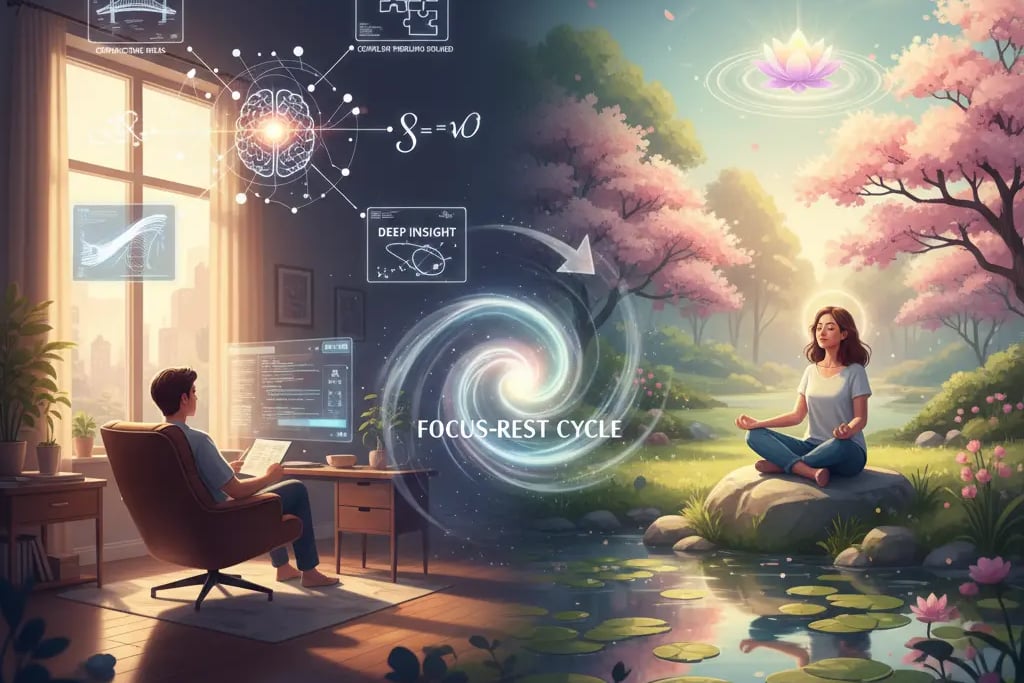
Intuitive problem-solving works differently. You name the problem clearly. You gather relevant information. You consciously work with the problem for a period of time. Then you stop forcing. You let the problem rest in the background of your awareness while you shift your attention elsewhere.
In this state of non-forcing, your deeper mind (what researchers call the default mode network) becomes active. Your brain is making connections at a level beyond conscious awareness. Patterns are forming. Relationships between seemingly unrelated elements are becoming visible.
Then insight arrives. Not through analysis, but through direct knowing. The solution appears complete. Or the first insight appears, which leads to the next insight, which leads to the solution.
This isn't passive. You've done the groundwork. You've gathered information. You've engaged consciously. Then you're allowing the deeper work to happen.
How Intuitive Problem-Solving Manifests
The manifestations are evident when you know what to look for.
You're designing something and you're stuck on a particular element. The standard approaches aren't working. Rather than pushing harder, you step away. You go for a walk or take a nap. When you return, you suddenly see a completely different approach. One that's more elegant than anything you would have thought of through analysis.
You're in a conversation trying to resolve conflict. The logical approaches aren't working. You feel stuck. Then you pause. You sit with the discomfort rather than pushing for resolution. And suddenly, a completely different framing becomes obvious. One that honors both people's needs in a way the logical approaches never would have.
You're facing a business decision with complex variables. You've modeled different scenarios. You've run the numbers. And you're still uncertain. So you sit with the question. You don't try to answer it. You let it sit in your awareness. And a pattern becomes visible. A way of thinking about the problem that you hadn't considered. And the decision becomes clear.
You're working on a creative piece and you're stuck. The logical structure isn't working. You've tried multiple approaches. You step away. You do something completely different. When you return, you see the piece differently. A structural element you hadn't considered becomes obvious.
These aren't rare occurrences if you develop intuitive problem-solving. They become increasingly common. Solutions appear more regularly. Problems that seemed impenetrable suddenly reveal their solutions.
The Neuroscience of Intuitive Problem-Solving
The neuroscience maps what's happening quite clearly.
When you're consciously working on a problem, your task-positive network is active. Your brain is focused, directed, working on the specific problem. This is useful for certain types of work.
When you stop consciously focusing and allow your mind to wander or rest, something different happens. The default mode network activates. This network is involved in mind-wandering, self-reflection, and what researchers call "unconstrained thought." When this network is active, your brain makes novel associations. It connects information in ways that focused thinking wouldn't.
Importantly, these two networks work better when they're in balance. Too much task-positive network and you're rigid. Too much default mode network and you're scattered. But when they work together. When you consciously focus and then deliberately shift to unfocused awareness. Problem-solving power increases dramatically.
Studies on creative problem-solving show exactly this. People who alternate between focused work and deliberate rest solve more problems. More specifically, they solve problems in more creative ways. The solutions are more elegant.
The period of incubation. The time between when you stop consciously working on a problem and when you return. Is crucial. During this time, the brain continues processing at unconscious levels. Connections are forming. Patterns are becoming visible.
This is why sleep is so powerful for problem-solving. During sleep, your brain is incredibly active. It's making connections, consolidating information, reorganizing around patterns. Many people report that solutions arrive in dreams or in the morning upon waking. The brain has been working on the problem overnight.
Why Intuitive Problem-Solving Matters
The development of intuitive problem-solving capacity is revolutionary for navigating complexity.
First, it makes you far more creative. Problems that seem impossible through logical analysis often have elegant solutions that only emerge through the deeper processing that intuitive problem-solving activates. You become capable of genuinely novel approaches rather than variations on conventional thinking.
Second, it dramatically reduces the time spent stuck. In conventional problem-solving, you can spend enormous energy trying to force solutions. With intuitive problem-solving, you work efficiently, then let the deeper mind work. Solutions emerge faster.
Third, it makes you less exhausted. Forced problem-solving is mentally exhausting. You're pushing, straining, trying to think your way through. Intuitive problem-solving uses less mental energy because you're working with how your mind actually functions rather than against it.
Fourth, it improves the quality of solutions. Solutions that emerge from deeper processing tend to be more robust. They work better because they emerge from deeper understanding rather than from surface analysis.
Fifth, it creates innovation. Many significant innovations have emerged from intuitive problem-solving. Inventors, artists, and scientists regularly report that their breakthrough insights came not from focused analysis but from the incubation period. The time when they weren't consciously working on the problem.
Most fundamentally, intuitive problem-solving is the recognition that you have resources beyond your conscious thinking mind. You have deeper intelligence. When you learn to work with it, you become far more capable.
Signs You're Developing Intuitive Problem-Solving
Several signs indicate you're developing this capacity.
You experience more "aha" moments where solutions appear seemingly out of nowhere.
You find that the best ideas come to you when you're not focused on the problem. In the shower. Walking. Just waking up. You're learning to trust these moments.
You become more comfortable with periods of not knowing. You don't panic when you don't have an answer immediately. You recognize that the answer is forming.
Your solutions become more creative and elegant. They're no longer just logical applications of known approaches. They're novel, often more effective than conventional solutions.
You spend less time stuck on problems. You work with them consciously, then release. The solutions come.
You notice patterns more readily. Things connect. You perceive how seemingly unrelated elements fit together. This is your deeper mind recognizing patterns that conscious analysis would have missed.
Developing Intuitive Problem-Solving
The development of intuitive problem-solving requires both structured engagement and deliberate disengagement.
First is clear problem definition. You have to understand the problem clearly. Gather information. Understand the constraints. Understand what matters. Do this consciously. Don't skip this step.
Then engage actively. Work with the problem consciously for a defined period. Brainstorm. Analyze. Research. Use your logical mind fully.
Then deliberately step away. This is crucial. You need sustained periods of not working on the problem. Go for walks. Exercise. Do activities that are engaging but don't require the thinking the problem requires. Sleep. Dream.
During these periods, your deeper mind is working. Trust that it is.
Then return to the problem with fresh eyes. Often, the solution has become visible or the path forward is clear. If not, repeat the cycle.
Meditation practice accelerates intuitive problem-solving development. Meditation trains you to notice the difference between focused thinking and unfocused awareness. It trains your brain to work with both modes. It also creates the mental space where deeper processing can happen.
Sleep hygiene matters enormously. Get adequate sleep. Your brain needs the sleep cycle to do its deepest processing work.
Physical movement helps. Going for walks, exercising, stretching—all of these engage your body in ways that allow your mind to wander. Mind-wandering is when the default mode network activates. This is when intuitive problem-solving work happens.
Common Blocks to Intuitive Problem-Solving
Several blocks commonly prevent intuitive problem-solving development.
The first is the belief that you have to force solutions. You've been taught to push harder, think more intensely, try more determinedly. Intuitive problem-solving requires the opposite sometimes. It requires release and trust.
Recognizing that both forcing and releasing are part of the process dissolves this block.
The second block is fear of not knowing. If you don't have an answer immediately, you panic. You think something is wrong. You redouble your efforts.
Learning to be comfortable with incubation periods—knowing that the answer is forming—helps dissolve this.
The third block is not actually stepping away. You say you're going to incubate, but your mind keeps returning to the problem. You can't truly disengage.
This often requires practices like meditation or physical activity that engage your full attention so that you're not partially focused on the problem.
The fourth block is having too many demands. If your life is full from morning to night with obligations, you don't have time for the incubation period. There's no space for solutions to emerge.
Creating adequate space in your schedule is essential for this capacity to develop.
Intuitive Problem-Solving and the Homo Luminous Path
Intuitive problem-solving is not the endpoint of Homo Luminous development. It's an expression of a more fundamental shift.
When you're operating from direct knowing, intuitive problem-solving flows naturally. When you're present and not obsessing about the past or future, solutions appear. When you're not defended emotionally, creative problem-solving is easier.
Intuitive problem-solving is also the practical application of Homo Luminous consciousness to the world's complex problems. The problems facing humanity require creative solutions. Solutions that only emerge from the deeper levels of consciousness that Homo Luminous consciousness accesses.
People operating from intuitive problem-solving generate novel solutions to old problems. They perceive new possibilities. They don't get stuck in conventional thinking. This is the kind of innovation the world needs now.
The Capacity Available
What becomes possible as you develop intuitive problem-solving is the capacity to work with genuine complexity.
Complex problems don't yield to forced effort. They require creativity, pattern recognition, and the integration of multiple levels of understanding. These emerge from the deeper processing that intuitive problem-solving activates.
As you develop this capacity, your confidence in facing difficult problems increases. Not because you're more powerful, but because you understand how your mind works. You know the process. You trust it. Solutions arrive.
This is particularly powerful in organizations and communities. When people can bring intuitive problem-solving to collective challenges, the solutions are far more creative and effective than what forced, competitive thinking produces.
You're invited into this capacity. The capacity to work with complexity. To allow solutions to emerge. To trust your deeper intelligence.
That capacity is already within you. It's waiting for you to learn to work with it.
Next Steps
The next time you face a complex problem, try this:
Engage consciously with the problem for a set period. Gather information. Think through it. Use your analytical mind fully.
Then stop. Set the problem aside deliberately. Go do something else for at least a few hours. Better yet, sleep on it.
When you return, notice what's different. Has new insight appeared? Is the path forward clearer?
This simple practice begins awakening intuitive problem-solving capacity.
Over time, as you trust this process, your solutions become more creative and emerge more quickly. You're learning to work with your whole mind, not just the small part that's consciously focused.
You're developing intuitive problem-solving. And intuitive problem-solving is how Homo Luminous consciousness navigates complex reality.
Intuitive Problem-Solving